




Unlocking growth in the UK’s mid‑market
Mid‑market businesses play a critical role in the UK economy, yet decision delays are becoming a constraint on growth. These businesses generate over one fifth of private‑sector GVA and employ more than 5 million people. Yet most leaders believe their biggest decisions are taken later than they should. The Decision Economy looks at why decision‑making has slowed, what it costs businesses, and what could be unlocked if decisions were taken earlier.



Decision speed is now an economic issue
73%
of mid‑market leaders report frequent delays in major decisions
4.7
weeks on average spent to make a major decision
77%
of leaders believe acting sooner would have improved their last major decision
£13.7
billion potential annual GVA could be unlocked with faster decisions
Decision speed is now an economic issue
73%
of mid‑market leaders report frequent delays in major decisions
4.7
weeks on average spent to make a major decision
77%
of leaders believe acting sooner would have improved their last major decision
£13.7
billion potential annual GVA could be unlocked with faster decisions
Time to reach a decision
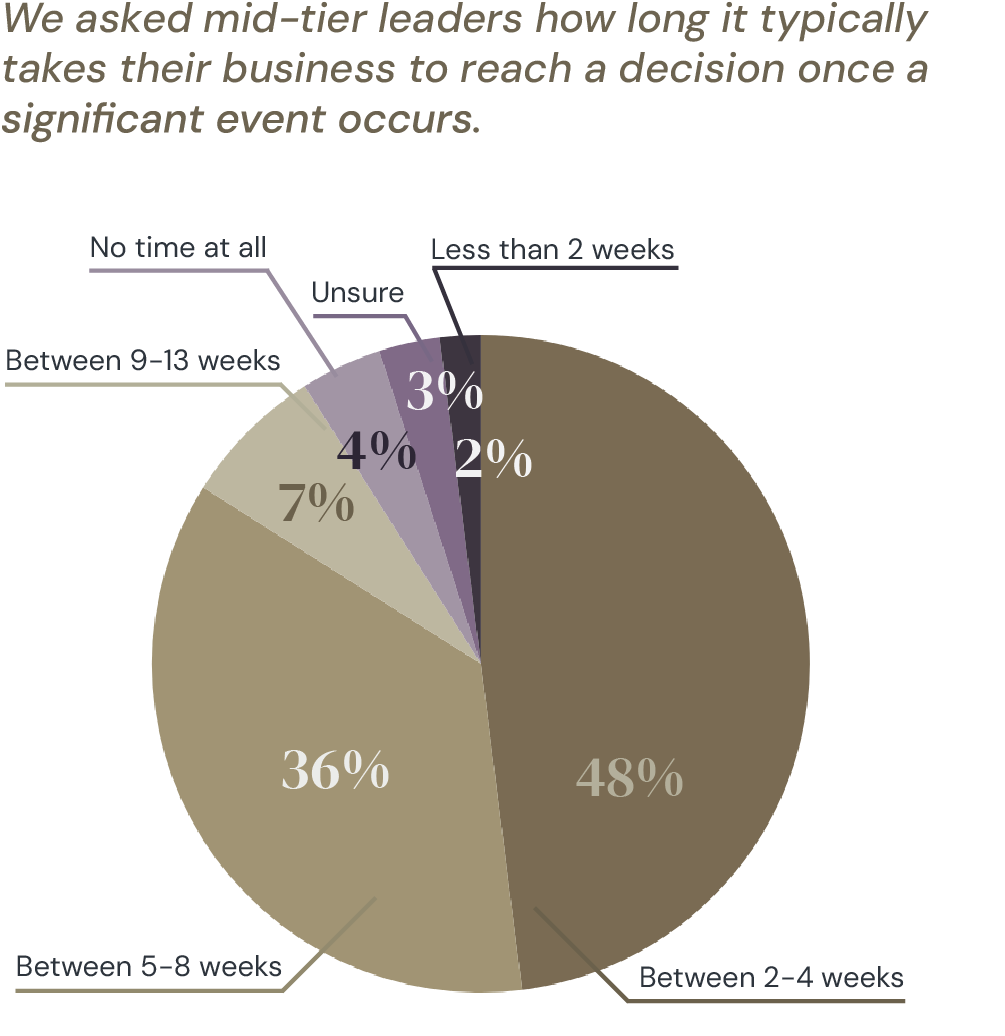
When a major event triggers a decision, most mid‑market businesses take several weeks to act. Nearly half reach a decision within two to four weeks, while more than a third take five to eight weeks. The research explains why acting earlier can preserve more choice and value.
The UK mid‑market sits at the heart of the economy and at the heart of FRP. Our purpose is to support leaders at the moments that matter, helping them make better and faster decisions so they can protect value, create growth and deliver the best possible outcomes for their organisations.

Decision speed matters more in some sectors than others
The research shows that decision speed carries different weight across sectors. Knowledge‑intensive industries such as professional and business services and technology account for a large share of mid‑market output and face frequent high‑stakes decisions around investment, growth and capability. As businesses scale, decisions become bigger and more complex. The challenge is reaching clarity quickly enough while the stakes are rising.

Decision pressure is felt across every region
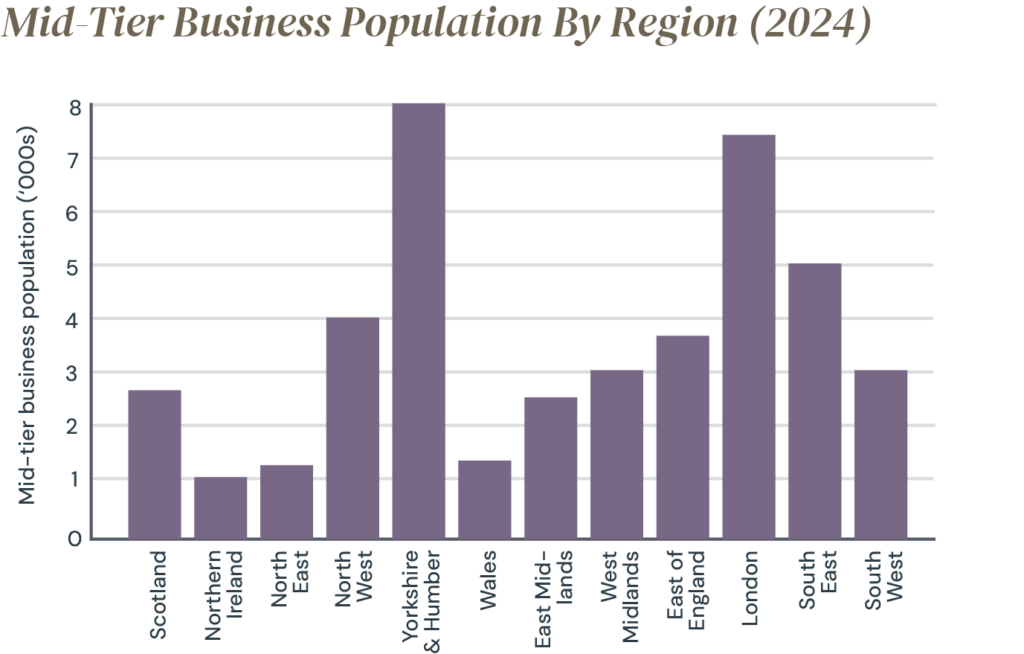
Mid‑market businesses operate in every part of the UK, but their economic impact and decision environment vary by region. London‑based firms generate the largest share of output, while regions with high concentrations of mid‑tier businesses support significant employment and local growth. Leaders in every region report similar pressures around uncertainty, data, approvals and timing. The opportunity to improve decision speed and outcomes is national, even though the scale and context differ locally.
Decision pressure is felt across every region
Mid‑market businesses operate in every part of the UK, but their economic impact and decision environment vary by region. London‑based firms generate the largest share of output, while regions with high concentrations of mid‑tier businesses support significant employment and local growth. Leaders in every region report similar pressures around uncertainty, data, approvals and timing. The opportunity to improve decision speed and outcomes is national, even though the scale and context differ locally.
Better and quicker decision‑making has real value at scale, for individual businesses, for their stakeholders and for the wider economy. That is the opportunity of the Decision Economy.

/Passle/611cdc8bfac91e0bc4343915/MediaLibrary/Images/2026-08-04-17-03-39-739-6a721b6b663e81e26a6aee8a.jpg)


The Decision Economy
is still evolving
The forces reshaping decision‑making in the UK mid‑market are not temporary. Persistent uncertainty, growing data complexity and accelerating AI adoption mean that the ability to reach clarity earlier is becoming a competitive advantage.
FRP’s The Decision Economy brings together new research to explore how decisions are changing under sustained volatility, where delays arise, and what could be unlocked by moving earlier.
Be among the first to access the full findings — and understand what they mean for your business.
Talk to one of our experts
A confidential discussion on how decision timing is affecting your organisation and what might be unlocked by moving earlier, with confidence.
Explore the research
Follow the latest thinking
Talk to one of our experts
Decision Economy methodology
The research combines independent economic analysis by Development Economics with a bespoke Censuswide survey of 601 senior leaders and board members at UK companies with 50 to 499 employees, conducted in March 2026. It is complemented by in‑depth interviews with experienced CEOs, investors and board‑level operators, providing detailed insight into how complex decisions are taken in real business conditions.

