





A warm (all most heatwave) welcome to the Third edition of the FRP Transition Network Newsletter. As always we hope you’ll find the information here supportive and keep you connected, and informed with practical insight that adds real value to your work.
In this issue
• The Decision Economy (Report)
Key themes and challenges shaping decisions in UK business from our latest research.
• The Value agenda – Why the financial picture is never the whole picture
An interview with Susan Moor
• Beyond Survival: Navigating the 2026 Manufacturing Inflection Point
Allan Kelly reviews some of the current issues facing manufacturing
• Latest developments in the M&A market
Geraint McGrath (CF Partner) discusses the recent trends in M&A
• Disciplined confidence: how private equity is responding to wider pressures
An overview of the key trends impacting the private equity market.
Further insights and information
• Insights Worth a Read or listen
Curated articles and podcasts we think are genuinely useful.
• Guest article
Operating Costs: Timing Is Everything
• Events of Interest
Upcoming sessions and discussions to keep you connected and ahead of the curve.
Thanks for all the feedback so far. Please do keep it coming, we want to make sure this is always a genuinely useful platform of CPD, peer learning and support for you.
Warm wishes,
Susan and Lincoln
News and Insights
Our latest news and work form across the business.
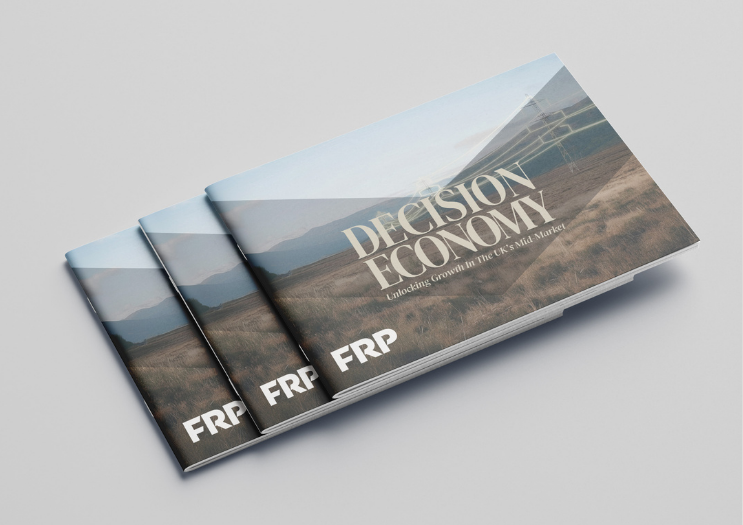
The Decision Economy – our full report
As part of our critical work in the mid-market space. We have undertaken research to explore what needs to happen to unlock growth in the UK’s mid-market.
Mid‑market businesses play a critical role in the UK economy, yet decision delays are becoming a constraint on growth. These businesses generate over one fifth of private‑sector GVA and employ more than 5 million people. Yet most leaders believe their biggest decisions are taken later than they should.
The Decision Economy looks at why decision‑making has slowed, what it costs businesses, and what could be unlocked if decisions were taken earlier.
Key findings include:
- Sluggish decision-making is costing the UK economy up to £13.7 billion annually, equivalent to about 0.6% of GDP.
- In Scotland, mid-sized businesses could add over £500 million to annual economic output if they made key decisions more quickly.
- The North West region could generate around £1.1 billion in additional annual economic output if decisions were made more swiftly.
- London mid-market businesses could generate almost £6 billion in additional output if key decisions were made more quickly.
These insights underscore the importance of efficient decision-making for economic growth and resilience.
Decision Economy methodology:
The research combines independent economic analysis by Development Economics with a bespoke Censuswide survey of 601 senior leaders and board members at UK companies with 50 to 499 employees, conducted in March 2026.
It is complemented by in‑depth interviews with experienced CEOs, investors and board‑level operators, providing detailed insight into how complex decisions are taken in real business conditions.
Podcast: The Value agenda – Why the financial picture is never the whole picture with Susan Moor
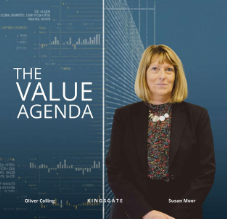
Susan sat down earlier this month with Oliver Colling of Kingsgate to discuss how the turnaround profession has changed. The discussion included the emerging trends for being successful and what makes a good turnaround professional.
Beyond Survival: Navigating the 2026 Manufacturing Inflection Point
By Allan Kelly – Partner Newcastle and Sunderland
The narrative for UK manufacturing in early 2026 has been a tale of two areas. While a new national Industrial Strategy initially sparked a wave of “cautious optimism,” the arrival of April and the end of Q1 has brought a stark reality check.
We are now witnessing a widening “resilience gap” between large-scale innovators and the mid-market/SME supply chain.
As we rapidly move through the first half of the year, the sector is facing a convergence of geopolitical, fiscal, and operational pressures — a compounding set of balance‑sheet pressures now testing even the most robust organisations. For business leaders, lenders, and stakeholders, the goal has shifted from merely weathering the storm to navigating a period of forced evolution.
Latest developments in the M&A market
Geraint McGrath – Partner Cardiff, reviews the latest developments in the M&A market
In the face of ongoing economic headwinds, the M&A market is showing welcome signs of energy and we’re seeing a steady uptick in engagement. This is not a sharp rebound, but a more considered return to activity, with businesses planning earlier and approaching opportunities with greater conviction.
This isn’t because the headwinds have cleared. A volatile domestic political landscape, ongoing conflict in the Middle East and the longer tail of global trade tensions all continue to define the backdrop. The full economic impact of the Middle East conflict in particular has yet to filter through, and many in the market expect it to influence supply chains and pricing for some time to come.
Yet for most dealmakers, the unpredictability of the post-COVID years means that uncertainty has become a mainstay of the operating environment, rather than a reason to pause.
Businesses are embedding slightly lower growth assumptions into their models and taking a more pragmatic view on timing. Put simply, the days of waiting for perfect conditions appear to be behind us.
Disciplined confidence: how private equity is responding to wider pressures
Jessica Ring, Director – Research & Sponsor Coverage Corporate Finance London examines the factors shaping private equity activity in the lower-mid market.
As we approach the summer, private equity in the lower mid-market is selectively active rather than ‘slow’. Conviction is being rewarded, ambiguity is being punished and outcomes are increasingly binary.
Undeployed capital remains abundant and the pressure to put money to work is real. But that capital is concentrating into a narrower set of deals where the underwriting case is clean, defensible and easily evidenced.
High-quality assets are still clearing quickly through competitive processes, often with multiple bidders and a wider valuation range than many expected. By contrast, ‘average’ businesses are seeing materially weaker demand, late-stage re-trades or processes that simply lose momentum as buyers pull back from anything that feels marginal.
The market, in other words, has become more polarised and more binary. Resilient, high-conviction assets get done while everything else faces delay, repricing or attrition.
Operating Costs: Timing Is Everything
Guest article by David Kendall (ATP Partner & IFT specialist member)
During a recent discussion with the FRP team, one point stood out clearly: in many situations, the most controllable lever for value creation is also the one engaged too late — operating costs.
Every business depends on them, yet in turnaround situations they are often only addressed once pressure has already escalated.
Timing is critical. There is a window in the transformation journey where operating costs can materially influence outcomes. Engage early, and they support cash preservation, margin protection, and value creation. Engage too late, and they become harder, more expensive, and less flexible. The shift is driven by confidence.
Once suppliers sense distress, behaviour changes. Terms tighten, deposits appear, and pricing adjusts to reflect risk. Optionality reduces, just when flexibility is most needed.
By contrast, early engagement creates a different dynamic. Suppliers compete. Terms are negotiated from a position of strength. Contracts can be structured for both efficiency and resilience.
Consider a mid-market retailer: Beyond cost of goods for resale, there is a substantial layer of expenditure that underpins the operation: logistics, warehousing, agency labour, facilities, maintenance, technology, connectivity, payment processing, fleet, fuel, professional services, and more. In many cases, this “everything off the shelf” spend runs into tens of millions annually.
Not all categories will yield savings. But only a small number of targeted interventions are needed to make a meaningful impact. Identifying £1 million to £2 million of sustainable savings in this area can be transformative. For a business generating £1 million of profit, that represents a vast 100% to 200% uplift in earnings and, by extension, enterprise value.
Importantly, this is not just about cost reduction. When structured correctly, improvements can be locked in over multiple years through well-negotiated contracts, while retaining flexibility to scale activity in line with trading conditions. Without this, fixed commitments can quickly become constraints.
There is also a strategic dimension. Operating costs underpin how a business functions and competes. Decisions around suppliers, infrastructure, and service models can either enable or restrict future performance.
For advisory professionals, the implication is clear. Operating costs are not a secondary lever. They are often one of the most immediate and controllable drivers of value. But their impact is highly dependent on timing. Engage early, and they support recovery and value creation.
Engage too late, and they can accelerate decline.
To stay connected, please update your profile and permissions.
Worthwhile reading…
Interesting articles and thought-provoking insights
Podcast / Video
An AI introduction for Boards
Simon Poole & Daniel Osmer • Spectrum Search
Article
Digital Transformation: 18 Reasons It Should Never Be Viewed As ‘Done’
Forbes Business Council • Forbes
Podcast (Apple)
Sir John Kingman: Why boards need more misfits – lessons from the financial crisis
Host on Apple Podcast • Nurole
Interesting events
Some upcoming events we think you might find valuable.
A few final words
Thank you again for being part of the Transition network with FRP.
As we’ve mentioned, this newsletter is designed for you. So please keep the feedback coming.
Tell us what you want more (or less) of in future issues — insights, CPD, sector updates, events or anything else that would help you in your professional work.
Finally in order to stay connected, you need to keep your profile and permissions up to date on the Network.
For any problems updating your profile email lincoln.coutts@frpadvisory.com
Best wishes,
Susan and Lincoln
Do you have an idea for something else you would like us to include in future editions, please get in touch lincoln.coutts@frpadvisory.com
