
Traditionally, retail property conversations have centred on familiar fundamentals: location, rent, footfall and covenant. Those…
Published:
October 23, 2026
Share
Written by:


Traditionally, retail property conversations have centred on familiar fundamentals: location, rent, footfall and covenant. Those fundamentals still matter, but following a decade where online growth has dominated the conversation, retailers are asking different questions about what physical space needs to achieve. As a result, investors and landlords are also having to think differently about what makes a good asset.
Prime is a matter of perspective
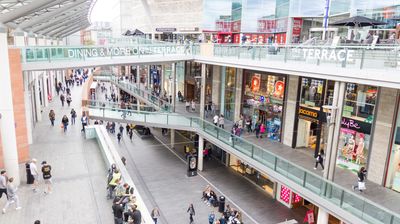
Location decisions no longer follow a simple high street versus out-of-town split, it depends on the brand and its customers. A location can look attractive to an investor on paper but make little sense for the retailer and customer. Equally, an unconventional location can prove strategically valuable for the right brand.
It’s easy to forget that seven in every ten pounds of retail spend is still in-store or ‘offline’ and for most brands the physical store is a critical part of the overall brand experience. With younger customers increasingly valuing real-world experiences, physical retail is giving customers something that online can’t. Retailers have the opportunity to build human interaction and community through increasingly creative in-store experiences, leading smaller brands to deliberately choose destinations traditional property thinking wouldn’t immediately consider.
If the role of the store has evolved, the criteria used to select and value property should change with it. But this raises the question whether retailers and investors are looking for the same things.
Is the value in the tenant or the building?
For retailers, value comes from finding a space that reaches the right customers, supports the brand and works alongside online sales. Investors are weighing a different mix of factors: the tenant’s financial strength, the quality and location of the building, and its potential to attract another occupier in the future.
Different investors also have different priorities, from reliable long-term income to the opportunity to improve, reposition or redevelop a property. Five investors could therefore look at the same vacant unit and have very different perspectives on whether the value is in the tenant, the location or what the building could become in the future.
Better data drives better decisions
More detailed data is helping retailers and investors assess locations, customer demand and future potential with greater precision. AI could make that analysis faster and more accessible, allowing decision-makers to compare a wider range of opportunities. So, for how long will local knowledge, relationships and commercial judgement still shape the final decision?
It’s against this backdrop that we’ll be exploring ‘Retail Real Estate: Property as a strategy, not an overhead’ at FRP’s upcoming Retail Conference.
Together with our panel of retail and property experts, where long-term value sits, and how data, AI and changing consumer behaviour are reshaping property decisions. If you’d like to join us, you can find out more and register your interest here.
Subscribe to our latest insights by topic here
Quick read
Retail’s message to the Chancellor – cut costs, create certainty
Retailers need targeted action from the Autumn Budget on employment costs, business rates and policy certainty to unlock investment in…

Quick read
The manufacturing cyber risk hiding in plain sight
After almost 17 years working in digital forensics and incident response, I'm still surprised by how often manufacturers underestimate…

Quick read
AI in investigations: speed is only useful if it sharpens decisions
A recent announcement from Relativity caught my attention. As part of an update to its Academic Program, it will now train future lawyers…

Quick read
Do you recognise me? Supreme Court opens a new route to recovery for foreign judgment creditors
Valeriy Ernestovich Drelle v Servis-Terminal LLC The Supreme Court has handed down another landmark judgment which allows creditors to…